The Selective Test Maths Revolution: Why Rote Learning is Dead in 2026 — Selective online test papers & screen-based prep
By GoTestPrep
NSW Selective Test prep · Mathematical Reasoning Tips · 13 March 2026
For decades, the path to a high score in the NSW Selective High School Placement Test was clear: master your times tables, memorise your formulas, and drill high-speed arithmetic until it became second nature. However, as we move into the 2026 and 2027 entry cycles, that era has officially ended.
The introduction of the Mathematical Reasoning section (replacing the old Mathematics component) represents more than just a name change. It is a fundamental shift in how the NSW Department of Education identifies giftedness. In 2026, the test-makers are no longer interested in how fast your child can calculate; they want to know how well they can reason.
With the new equal 25% weighting and the transition to computer-based testing (CBT), mastering this maths revolution is the key to securing a placement in Sydney's elite schools.
- The Death of the "Calculator Kid"
The most striking feature of the 2026 Mathematical Reasoning test is what is not in the room: a calculator. While many high school subjects rely heavily on technology, the Selective Test remains a calculator-free zone.
The factual reality
Questions — 35 multiple choice.
Time — 40 minutes.
Format — Digital (CBT).
Weighting — 25% of the total score.
This creates a unique challenge. In a world where every Year 6 student has access to a device, the ability to perform mental arithmetic is becoming a lost art. However, the 2026 test isn't just a mental maths quiz. The numbers involved are usually simple (e.g. 12, 25, 48). The difficulty lies in the multi-step logic required to figure out which numbers to use and how.
- "Reasoning" vs. "Arithmetic": What is the Difference?
To understand why rote learning fails in 2026, we have to look at the anatomy of a modern Selective question.
The old style (arithmetic focus)
"What is 15% of $480?"
This is a knowledge question. If the student knows the formula for percentages, they get the mark. It tests memory and speed.
The new style (reasoning focus)
"A shop offers a 'Buy 2 Get 1 Free' deal on shirts that cost $45 each. A second shop offers a 25% discount on the same shirts. If Sarah needs to buy 6 shirts, which shop is cheaper, and by how much?"
This is a Mathematical Reasoning question. It requires:
Deconstruction — Breaking the word problem into two distinct scenarios.
Comparison — Calculating two different sets of logic.
Subtraction — Finding the difference between the two results.
Verification — Ensuring the Buy 2 Get 1 Free math is applied correctly to the quantity (6 shirts).
In 2026, the arithmetic part is easy (45 × 4 versus 45 × 6 × 0.75). The reasoning part—recognising that Buy 2 Get 1 Free for six shirts means you only pay for four—is where students trip up.
- The Four Core Domains of the 2026 Test
Based on the latest 2025 and 2026 sample papers, the test is divided into four conceptual domains. A high-scoring student must be proficient in all of them.
Domain A: Number and algebra (the variable hunt)
This domain covers everything from prime numbers and factors to basic algebraic thinking. In 2026, we are seeing a surge in number logic puzzles, such as magic squares or balancing scales where different shapes represent unknown values.
Key skill — The ability to work backward from a result to find a starting value.
Domain B: Measurement and space (spatial awareness)
This isn't just about area and perimeter. It is about spatial reasoning. Questions often involve nets of cubes, identifying how a 2D shape would look when folded into 3D, or calculating the volume of a complex, irregular shape.
The 2026 trend — A focus on mental rotation: the ability to turn a shape in your mind to see it from a different perspective.
Domain C: Data and probability (the information filter)
Students are presented with a graph, a table, or a pie chart containing too much information. The challenge is to filter out the irrelevant data and find the specific numbers needed to solve a probability problem.
Key skill — Interpreting expected outcomes (e.g. "If I spin this wheel 100 times, how many times should it land on blue?").
Domain D: Working mathematically (word problems)
This is the reasoning anchor. These questions are almost entirely text-based. They describe a real-world situation—travel times, currency exchange, or mixing ingredients—and ask the student to model it mathematically.
- The 70-Second Challenge: Managing the Digital Timer
With 35 questions in 40 minutes, students have approximately 68 to 70 seconds per question. In the 2026 computer-based format, the timer is visible on the screen, which can induce test anxiety.
The "sunk cost" trap
In the old paper tests, students would often spend five minutes on a hard question, stubbornly refusing to move on. In 2026, this is a fatal strategy. Because every question is worth the same (one mark), spending four minutes to get one hard spatial question right might cost the student the opportunity to answer three easy number questions at the end of the paper.
The "flag and move" protocol
In the digital interface, students have a flag-for-review button. The most successful students in 2025/2026 used a three-pass system:
First pass (0–25 mins) — Answer all easy questions (those that take under 45 seconds). Flag everything else.
Second pass (25–35 mins) — Tackle the medium flagged questions.
Final pass (35–40 mins) — Guess or attempt the hardest logic puzzles. Never leave a blank. There is no penalty for guessing in the NSW Selective Test.
- The Role of the "Scratch Paper"
Even though the test is on a computer, students are provided with two sheets of A3 paper (or equivalent) for rough work. This is arguably the most important tool in the room.
Strategic factual advice
Research into high-performing students shows a direct correlation between diagramming and score accuracy. In 2026, questions are intentionally designed to overload a student's working memory. Trying to hold three different numbers in your head while calculating a fourth is a recipe for a careless error.
The rule — If the question has more than two variables, draw it. Whether it is a simple number line, a Venn diagram, or a rough sketch of a 3D shape, getting the information onto paper frees up the brain to perform the actual reasoning.
- How the 25% Equal Weighting Changes the Game
Before 2025, Mathematical Reasoning (then General Ability) and Maths sections were the heavy lifters. If a student was a maths genius, they could often carry a mediocre Writing score and still get into a top school.
In 2026, the maths shield is gone.
Because every section is now worth 25%, a perfect score in Maths only gives you a maximum of 25 points toward your total. If that same student scores poorly in Writing (due to lack of preparation), they are effectively capped.
The strategy for 2027 entry
Don't just do more maths. If your child is already scoring in the 90th percentile for Mathematical Reasoning, the marginal gains of more study are small. You will get a better return on investment by spending that extra hour on Writing or Reading to ensure a balanced profile.
- A 2026 Preparation Roadmap (Parent Checklist)
If you are guiding a Year 5 or Year 6 student, here is how to pivot from calculation to reasoning:
Step 1: The no-calculator rule. From now on, every piece of homework or practice should be done by hand. Speed is a muscle; if they don't use it, it will atrophy.
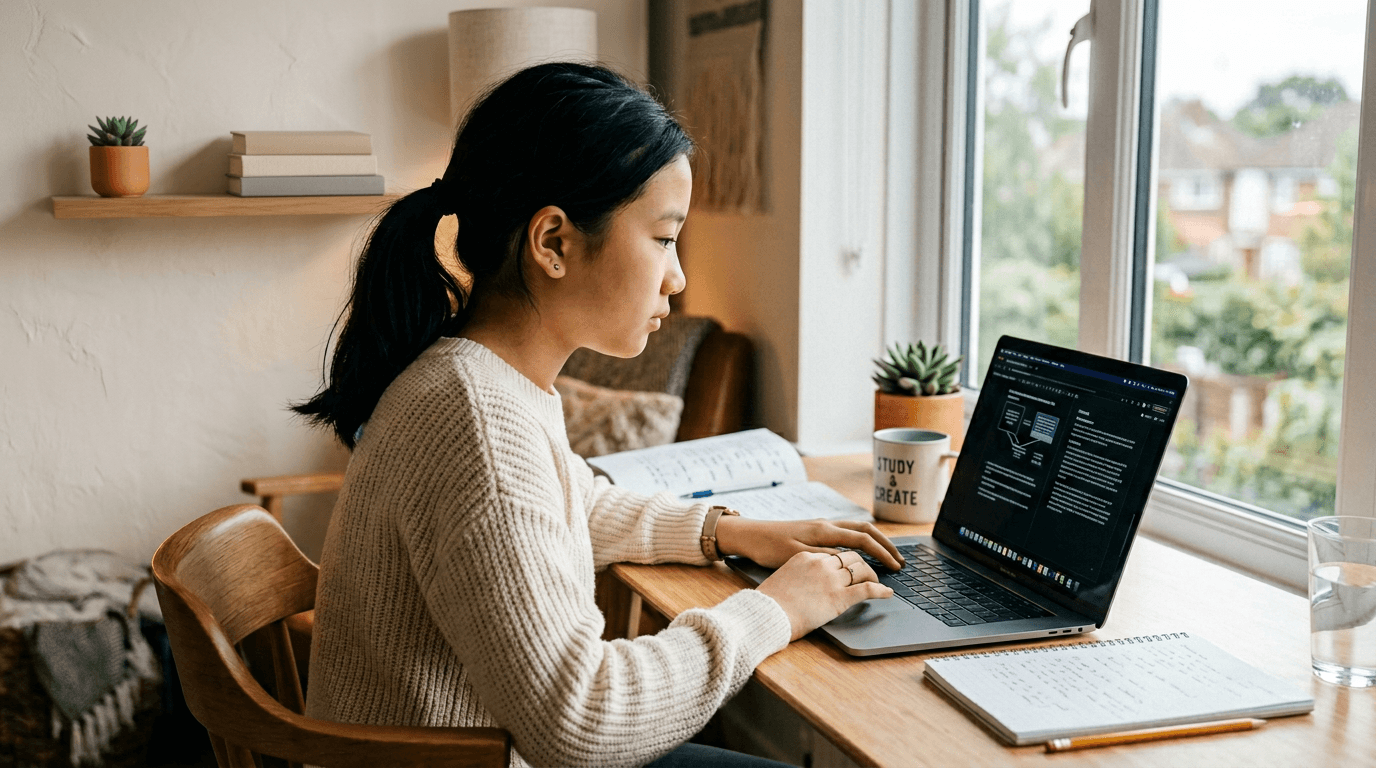
Step 2: Practice CBT navigation. Ensure your child has done at least five full-length digital mock exams. They need to be comfortable using a mouse to click small buttons (like Flag) and reading complex graphs on a glowing screen.
Step 3: Focus on multi-step word problems. Stop doing sheets of simple addition and multiplication. Instead, find problems that require at least three different operations to find the answer.
Step 4: The explain-your-logic drill. Once a week, ask your child to explain how they got an answer. If they say "I just knew it," challenge them to find a different way to prove it. This builds the mental flexibility needed for the Cambridge-style questions.
- Conclusion: The Power of Perspective
The 2026 Mathematical Reasoning test is not a test of what your child knows—it is a test of how they apply what they know to unfamiliar situations.
For the 2027 intake, the winners won't be the children who memorised the most formulas. They will be the children who can look at a confusing word problem, break it down into logical parts, and calmly navigate the digital interface to find the most reasonable solution.
Maths in 2026 is no longer about the what—it is entirely about the how.
Want reasoning reps without another stack of printouts? GoTestPrep Mathematical Reasoning practice strings together multi-step problems, clever distractors, and on-screen navigation so your child practises the how under exam-length fatigue—not just isolated algorithms.